

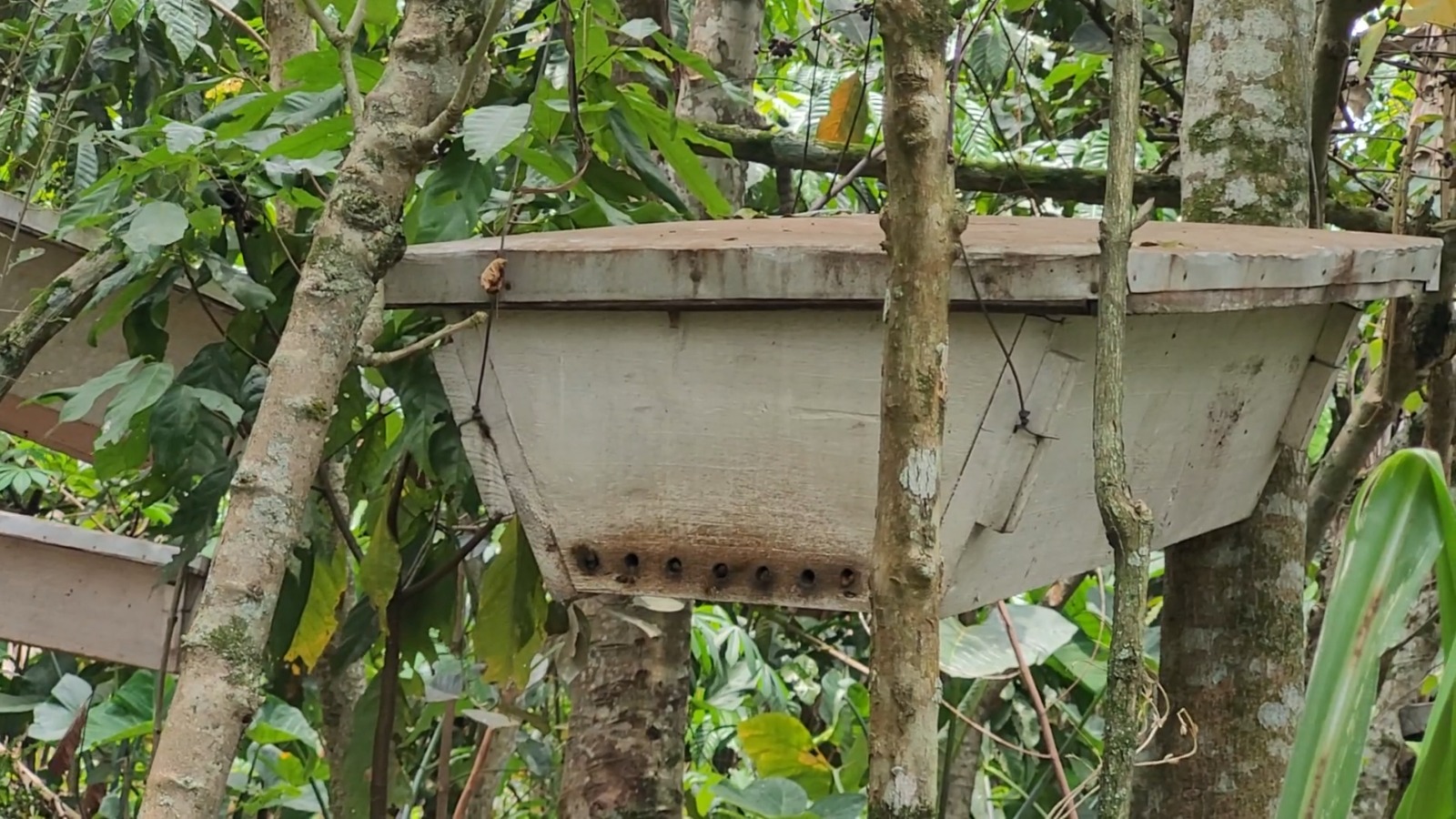
In Kayunga District, agriculture has long been the backbone of livelihoods, with beekeeping among the traditional activities practiced by local farmers.
This practice is now evolving from simple, indigenous methods into modern agricultural techniques, enabling farmers to increase production, improve incomes, and adopt more efficient farming practices.
Hannington Lwandasa, Kayunga District Entomology Officer, explained that traditional hives were made from locally available materials such as logs, tree trunks, and anthills.
These hives were often placed in trees or forests to attract wild bee colonies, with honey harvesting involving fire or smoke that sometimes destroyed hives and killed bees. As a result, production levels were low and inconsistent.
Lwandasa noted that traditional beekeeping remained small-scale, practiced by a few farmers across sub-counties such as Galiraya, Kayonza, Bbaale, and Kitimbwa.
Despite its limitations, the practice required little capital and simple tools, making it accessible to many households.
Over time, government programs and agricultural extension services introduced modern apiculture techniques, including the use of Langstroth hives, protective gear such as bee suits and gloves, smokers, and specialized beehive tools.
These innovations have improved hive management, increased honey yields, and encouraged community acceptance of modern practices.
“The introduction of modern hives and protective equipment, combined with community sensitization, has brought positive changes in attitudes and productivity,” Lwandasa said.
Modern beekeeping has also expanded opportunities for farmers to earn from other bee products, including beeswax, while improving crop pollination, agricultural yields, and environmental conservation.
Farms integrating beekeeping with flowering crops such as coffee benefit from higher-quality honey and stronger biodiversity.
Despite progress, challenges remain. The high cost of modern equipment, climate change affecting bee populations, and limited training in some areas continue to hamper growth.
Local leadership in Kayunga is actively working to address these gaps through ongoing support and capacity-building programs.
The transition from traditional to modern beekeeping is transforming the sector into a profitable agribusiness.
With continued training, improved technology, and sustained government and partner support, apiculture in Kayunga District has the potential to enhance rural livelihoods, strengthen food security, and promote sustainable agriculture.
